Showing posts with label otsu. Show all posts

Tuesday, November 1, 2016

Otsu Matsuri

“So how many puppeteers operate the karakuri ningyo?” I ask Mr. Yamada.

Karako” he corrects. "Four."

“And the karakuri ningyo’s age?” I ask.

Karako” he insists.

Karako was the only name these mechanical puppets went by in Toda, and it seemed by Mr. Yamada's insistence that calling them anything else was blasphemous.

It was an easy enough word, karako, but I had to forget what I previously spent hours practicing. Before I arrived in Japan I rehearsed my bow in the shower, trying to bend at a dignified 45 degrees, and repeated the Japanese words for "mechanical doll" over and over. "Ka-rakuri ningyo, kala-kurri ning-yo, ka-da-kuri ning-yo".


At some point I got a handle on the phrase and now when I tell people why I came to Japan I don't have to move my arms like a robot while saying the word for "doll" over and over again. But the more festivals I attend, the more I realize that every matsuri has its own vernacular. Karakuri ningyo only gets me so far.

The terminology is not the only difference. The puppets' mechanics, the performance techniques, and the design of the dashi are just a few of the distinctions you'll come across in each city. There's no place you'll experience these differences more vividly than at Otsu Matsuri. 
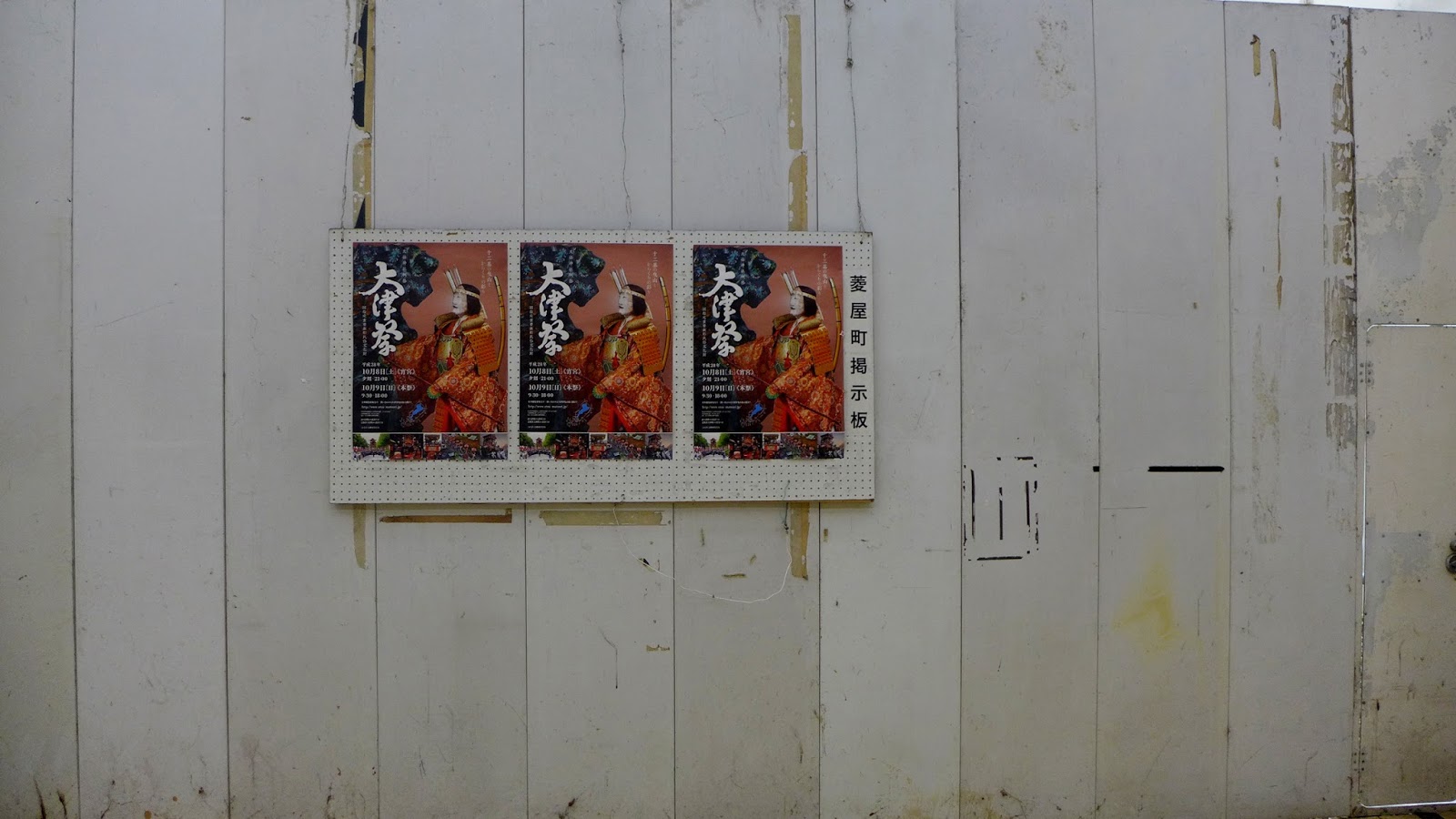


According to my mentor Yasuko Senda-san, until the 1980s outsiders were not openly invited to attend Japanese matsuri. While we imagine the "outsider" as a backpacking Westerner, during the Edo period when many of these Matsuri developed, an "outsider" could be anyone who didn't live in the town. It was considered a disservice to the city, the shrine’s deities, and ancestors who participated before to pull influence from other matsuri and homogenize the ritual, language, and performance methods. 


This is one of the many paradoxes I have experienced in Japan. It's a collective society that fosters uniformity, while also maintaining extreme examples of individuality and uniqueness. Japan is known for it's ubiquitous school uniforms and well-dressed salary men, but also for the extraordinarily unique fashions of Harajuku. 


Lucky for me the mechanical puppets in Otsu are called karakuri ningyo, however, instead of dashi, Otsu Matsuri's floats were often called hoko or yama. The hoko look similar to other festival dashi, but they have an additional front wheel and a top tier with wooden benches that criss cross the deck. Instead of playing on the first floor of the float, the ohayashi surround the karakuri ningyo puppets on the uppermost stage. The benches provide space for the musicians to sit, their heads peaking over the edge like a passengers on a riverboat.


During the pre-festival afternoon, the kajikata pull the hoko through Otsu's narrow streets. There's no room for the kajikata to dramatically rotate the floats, but there's still plenty of drama as the men haul the hoko up steep slopes to the musical encouragement from the ohayashi. Sure, there's flat roads and wide streets in Otsu, but at a Japanese matsuri, decisions are rarely made out of convenience.


Traffic lights are rotated out of the way of incoming hoko by teams of police officers clutching neon rope, while spectators are forced to squeeze against walls to let the floats pass. As children hang one-handed from the 5 ton hoko and a dozen musicians cram into the 50 square foot stage, it's clear you won't find phrases like safety hazard, capacity limits, or sight lines in the festival handbook.


Unlike the festivals in Aichi Prefecture where the dashi are stored in enormous towering garages, the hoko are dismantled and reconstructed every year. There's over 300 pieces to these 19th century floats, and it takes at least a week to restore just one. The hoko are kept in well-organized storage rooms where you won't find a single screw or nail. The floats are built through a century old technique of interlocking joints. 


That's right, no nails were used in the making of this hoko.


The night before Otsu Matsuri, the hoko line up in the town's narrow alleys and are adorned with hundreds of luminescent Japanese lanterns. 


At each float, visitors are met with cauldrons filled with warm sake, live music, and delicious red bean mochi. 


There's only a few vendors, perhaps because of the lack of space, so the homes facing the festival streets open their garages and offer visitors warm matcha and snacks at makeshift picnic tables. 


The cool breeze, hospitality, and warm tea makes for a cozy evening - but I should enjoy it while it lasts. The sun won't just bring a new day, but about a thousand extra visitors to the tiny streets of Otsu.


At 10:00am, visitors fill the sidewalks near Tenso Shrine. This is the first stop for the karakuri ningyo before they take their annual procession around the city. I feel terrible as I crush an elderly woman with my backpack as the police physically push spectators into ultra-snug clusters to make room for the first hoko.  As the giant float approaches, onlookers race to find the best view. Some have waited hours for this performance and everyone is primed for the show. The ohyashi surround the karakuri ningyo as one young taiko drummer peers over the float and down at my sweaty face with both pity and bewilderment. 


With the release of a loud creaking sigh, the hoko rotates completely away from the audience. Some of the spectators murmur in confusion as the karakuri ningyo face the shrine's entrance disinterested in the crowd's affection. The only audience that counts is the gods, as each puppet show is performed for the unseen deities.


I spend the morning chasing down the hoko with my camera, crawling through crowds, looking for short-cuts around traffic, and trying to get a good view of the karakuri ningyo performances. Traveling through the unfamiliar tiny streets, following music, and trailing behind clusters of people, I'm reminded a bit of Sleep No More, or the one time I sped through Connecticut's Bradley International Airport trying to catch a glimpse of Jennifer Anniston. 

As mentioned previously, the karakuri ningyo at Otsu festival is remarkably different than those in Aichi Precture. Some of the puppets are human-scale with more realistic design. They are often combined with whimsical small-scale puppets that appear from secret compartments.


This use of contrasting scales and fantastical creatures moves the performance in-between reality and the imaginary. The Japanese author Murasaki Shikibu sits at a desk writing The Tale of Genji. Suddenly, her words come to life as miniatures spring up from the bottom of the stage and rotate around her on a mechanical turntable.


Accorrding to Yasuko Senda-san, karakuri ningyo's use of the rotating platform is one of the first examples of the theatrical turntable in Japanese theatrical performance. It was later adopted on a larger scale by Japanese joruri performances.

Besides the difference in scale and aesthetics, the manipulation is Otsu Matsuri is also distinct. For each performance there is only one or two puppeteers who manipulate the puppets from the hoko's middle tier. This area is kept covered by large ornamental embroidery. Instead of operating the puppets directly below the figures, like a conventional rod puppet, the puppeteers use mechanical tracks and strings. As a result, the puppets' movements are more robotic and precise, sort of like a cuckoo clock. These mechanical tracks, or toi, are a trademark of Otsu's karakuri ningyo. 

In one memorable performance there is an external toi that takes the shape of a Japanese tree branch reaching over the hoko and above the audience. A hanging fruit opens to reveal a fairy. The fairy makes his away across the tree branch, and happily dances above the audience. 


In one of my favorite performances, a Japanese flute calls forth a lion. A secret compartment opens on the stage to reveal the adorable mechanical beast. The lion frolics across the toi to the applause of the audience below. 


This lion and fairy performances remind me of the countless colorful characters that appear everywhere imaginable in Japan. Warnings, instructions, and city logos are transformed into big-eyed moments of delight: an endearing amphibian reminds me to avoid putting my hand in-between the elevator's moving doors and an owl dressed like a police officer greets me as I activate a cross-walk signal. 

It's a lot easier to remember to turn off the lights when you leave your apartment when you're prompted by a picture of a deer wearing a kimono. As I watch the Shisa hop across the toi to an adoring crowd, it's clear that Japan's kawaii aesthetic can be traced back to Japanese's rich culture of performance and folklore. 

I want to stick around Otsu to discover the other characters that will unexpectedly emerge from the colorful hoko, but I have a train to catch. Takayama Matsuri starts in just three hours and it's 200 miles away. 


As I slip out of the crowd surrounding the Shisa's float, my vacant spot is quickly filled. I trace my steps back to Otsu Station and pass a couple racing through the back streets, trying to bypass the human congestion to get a good spot for the next performance. The way we race through traffic and nudge through crowds just to gawk up at these characters you'd  think they were celebrities. But they're not. These mechanical actors don't care about our adoration or applause. In fact, I'm certain they'd still be here, with or without us, performing for the gods.


Monday, October 3, 2016

Preparing for Ota Festival


I climb the steps to the second floor of the town home in Yokosuka. The young puppeteer gestures towards an aluminum door adjacent to a small tatami room holding a dozen festival organizers. I open the aluminum door, and teeter over a 16 foot drop into a vacant garage. My stomach flips as I survey the drop. Soon enough I realize that this is the doorway to the top of the district’s 6 meter festival dashi; but today’s ornamental float sits in in the front yard, surrounded teenaged boys sipping ice coffee as they greet passersby. 


The puppeteer zips across the 4 x 6 mesh floor with ease, locating two large wooden crates. It's the perfect place to show off the Ota Festival Preservation Society's karakuri ningyo. Crouched inside the suspended platform, my mentor and guide, Ms. Yasuko Senda, and I explore the puppet's mechanisms and movements. The puppeteer sets the three-foot mechanical actor on the ground and gestures for us to take photographs. Yasuko-san translates:

"We used to keep this secret. But not so much anymore," he expresses with a shrug.

I notice a similar sentiment later in the day. While at rehearsal for another district's karakuri ningyo performance, Yasuko-san and I gather in a tiny rehearsal room, as puppeteers nonchalantly illustrate the karakuri ningyo's once-mysterious mechanisms.


Unlike Tahara Matsuri, where the puppets are operated by strings, these characters are manipulated through handcrafted rods, or sashigane, adorned in multi-sized hooks and sleeves. The sashigane moves in and out of the karakuri ningyo during performances, releasing or igniting the puppet's internal mechanisms. The sashigane works together with the dashi's internal framework to create these karakuri ningyo's magical robotic feats.

But knowing the secrets is inconsequential. The amount of precision, practice, and complexity I observe only further fuels my fascination.


You hook that where? And rotate it here? While guiding that? 


If anything, it appears even more impossible. In translation, the sashigane is frequently mixed-up with the English word weapon. It's quickly corrected to “rod." But rod doesn't give the tool justice. Weapon works - the shashigane is wielded with careful deliberation and power.


Back at the garage, the puppeteer's younger brothers, cousins, and friends stand around the towering float, laughing and doing their best American accents. Eight of us practice lifting the 5 ton dashi. Specific positions are called out by the group's director, and the young men move in and out of the dashi arms in synchronized efficiency, balancing the 18th century float atop our shoulders. The act of pulling the dashi is an art in itself. It requires rehearsals, dedication, and superb calf muscles.

"And this is without the musicians and team of puppeteers on board," I think, red-faced and out of breath. My mind travels to Tahara Matsuri, where a cooler of sake and cold beer followed the dashis like a golf caddy through the city streets. I hope this group has the same amenities, but I can't bet on it. It's clear Ota Festival is very different than Tahara Matsuri.

For one, the dashi looks surprisingly distinct. Built in 1826, hand-chiseled dragons in cypress wrap around the float, framing the tiers in ornamental grandeur. On the second tier, a miniature proscenium protrudes like a majestic memorial. The dashi is a temple on wheels.


In the puppeteer's cabin, a large wooden track, or toi, helps guide the karakuri ningyo puppets up and down the dashi stage. The toi can also slide across the width of the dashi, moving the puppet left to right with graceful deliberation.

Unlike Tahara, where a ladder carried me up to the second tier, climbing up Ota's dashi isn't easy. My hips lodge in-between the cypress supports as I hopelessly pull myself through the unforgiving wooden beams. The puppeteers look around nervously, unsure if they made the right decision allowing me join their rehearsal. At the top, I grip the sides tightly and let out a whimper as the float is tilted into the air and the puppeteers next to me try to recall the English phrase "scaredy cat".

The puppeteers carry the tradition in their blood. Their fathers and uncles used to ride the same dashi, skillfully manipulating sashigane from puppet to puppet. Today, the youngest puppeteer is thirteen and the oldest twenty-five. Despite their youth, they take the job seriously. As I clumsily put my shoes back on and fumble with my camera, they cluster around the majestic dashi, shouting, laughing, and calling out to their friends with an envious natural hipness. I walk away from the waving teens in disbelief: in this town, it's cool to be a puppeteer.


Sunday, September 25, 2016

Tahara Matsuri


Tahara City sits at the head of Japan's Atsumi Peninsula. A two hour train ride from Nagoya Station, the city welcomes visitors with a landscape speckled with convenience stores, melon farms, and solar panels. On a typical Friday morning, traffic inches across Tahara Bay towards the second-largest Toyota manufacturing plant in Japan, as surfers head to the coast to tackle some of the most thrilling waves in the Pacific. 

However, this weekend is different. This weekend, all roads lead to the Tahara Matsuri, one of the last major summer festival in Aichi prefecture. 

Japanese festivals are distinguished by dashi, the multi-tiered floats that travel through city streets. Appearing as joyous thrones, these dashi sway above crowds of onlookers, marking the start of the weekend's festivities. Inside, musicians sit tightly packed with their instruments on the first floor, while mechanical puppets move six meters above their heads. These automated puppets, known as karakuri ningyo or "mechanical dolls," are what brings me to Tahara.


During the first quarter of the Edo Period, wooden robots carried tea across tatami floors to their masters, mechanical frogs hopped across late-night pubs with shots of sake on their backs, and festival floats were adorned with deities that transformed into dragons, orangutans, and magical carps. 

As far back as 1662, visitors to Takeda Omi's Karakuri Theater took delight in live entertainment absent of actors, dancers, or any type human flesh at all, for that matter. For over 100 years, the theater produced original plays cast entirely of mechanical actors. 


Four hundred years since these mechanical puppets first appeared on matsuri floats, they still delight thousands across Japan, performing in over 60 annual festivals. Even in permanent theaters, karakuri ningyo remains a popular attraction as robot ensembles continue to perform on rotation at the Kiryu City's Karakuri Puppet Theater and the Chiran Waterwheel Theater. The magic of these automated thespians is timeless, and their influence on Japanese culture is unmistakable. Just take a stroll down the bustling streets of Tokyo's Shibuya district, where crowds of tourists line up every night to watch a two hour dinner theater extravaganza with performing robots. 

For most of the year, each dashi hibernates in a city-sponsored garage. On the morning of the festival, the floats are released, and pulled by teams of men, teenagers, and children through the city of Tahara.


This afternoon, the three dashi converge at the festival center around 13:00, as the musicians, puppeteers, and audience prepare for the show.


Each performance is five to seven minutes long and captures a particular Japanese legend. The performances end with a cathartic transformation: a fish appears at the end of a pole, an empress is transformed into a dragon, a shinto priest releases white confetti from his wooden gohei.  


Each float has four puppeteers, with two puppeteers operating each karakuri ningyo within the secret deck. Inside, it feels like a club-house, with a few pillows and the smell of Japanese cypress. Only men are allowed up.


Following the performance, the dashi are exhibited in the festival hall, and greet the visitors from surrounding towns who have traveled to Tahara for the celebration.


I thought this was the end of the dashi. However, following the karakuri ningyo performance, music echoed down the narrow streets of Tahara. Behind the local elementary school, I saw the colorful tops of more dashi, starting and stopping, traveling in every direction.  Walking through Tahara's neighborhoods, I discovered teenagers adorned in body paint and colorful clothing pulling the floats.


On the bottom tier, young girls filled the dashi. With makeup and kimonos perfectly adorned, each girl climbs from the pit onto the stage. The audience participates, tossing coins and candy in the air.


These performances stem from weeks of preparation, and serve as a rite of passage for the participants. After the performance, the dashi continues to the next house, where it stops, and another girl steps up to perform.


In between the performances, teenage boys jump on the stage, and karaoke to J-Pop, often in zany hand-made costumes. 


At night, these traveling stages multiply once more, as Tahara's main street is transformed into a wild community performance, a sort of talent show performed at the exact same time as another talent show only 10 yards away, performed next to another talent show only 10 yards away, performed next to another talent show only 10 yards away...

Each stage has its own aesthetic style, some with multiple tiers, where technicians operate music from boomboxes, rotate makeshift disco balls and wave pulsing strobe lights. Many of these dashi have gas-powered flames, a wholly exciting flourish when accompanied by eight teenagers hanging off the sides, dancing and singing along with Japanese pop.


While I came to Tahara to experience the karakuri ningyo, its the dashi that left me with a lasting impression. The festival reframes many Western concepts of a stage, and transforms it into something that is ubiquitous, sacred, and accessible all at once. The design of these floats draws from the style of the traditional karakuri ningyo dashi seen earlier in the day; however, that traditional appearance is invigorated with the makeshift charm of christmas lights, kitsch, found objects, and untamed dancing. 


On the final day of the festival, hunabi is the word. Community members clasp enormous smoking fireworks as offerings at the local shinto shrine. In the evening, an unbelievable firework display lights up the night sky for over two hours. Chocolate bananas are served under tents and the McDonalds has a line out the door.


The community of Tahara is excited to share their history with visitors. They are also thrilled to show off an amazing eco-friendly electrical grid. Solar panels and wind mills dot the landscape, hugged by the Atsumi Bay and Pacific Ocean. At the top of the Mt. Zao, a giant turbine reminds visitors that almost 30 percent of the homes in Tahara are powered by renewable energy.


The observatory on Mt. Zao has a glow-in-the-dark celestial path that leads up to a sleek yogurt shop. It's the perfect place to enjoy the fireworks and watch Tahara's matsuri traditions as summer loosens its grip on the region.